





















*** Says government set aside $2 million since 2021 for redevelopment of Makoko waterfront
The Lagos State Government on Monday declared that recent demolition in Makoko, were part of a broader statewide safety and environmental policy aimed at preventing disasters linked to unsafe settlement, fire outbreaks, and high – risk infrastructure locations.
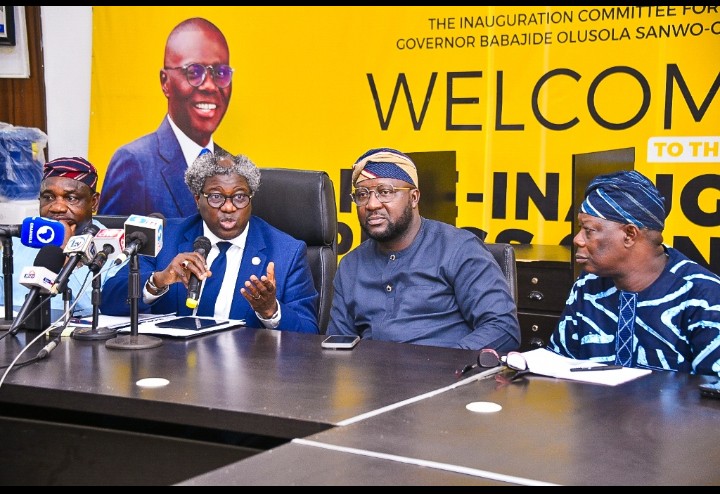
The State Government made the declaration during a press conference by the Special Adviser to the Governor Babajide Sanwo – Olu on E- GIS and Urban Development, Dr. Olajide Babatunde, at the Baguada Kalto Press Centre, Alausa, Ikeja.
Dr. Babatunde, flanked by the Commissioner for Information and Strategy, Mr. Gbenga Omotoso, and Special Adviser to the Governor on Media and Publicity, Mr. Gboyega Akosile, other state officials, said Lagos State intervention in Makoko was driven primarily by the need to protect lives, particularly across areas located in close proximity to high – tension powerlines.
He said Lagos State Government remains committed to improving living conditions across vulnerable communities while balancing development, environmental protection and public safety.
He noted that similar clearance exercise had been carried out in several parts of Lagos following fatal incidents caused by fallen power cables, stressing that Makoko was not single out for enforcement.
“Clearing high – tension corridors is a safety requirement across Lagos State. There action taken in Makoko is consistent with with what has been done in other communities,” he said.
Dr. Babatunde, who disclosed that the Governor Babajide Sanwo – Olu administration set aside $2 million since 2021 for the for the redevelopment of Makoko waterfront to meet international standards, assured that the Lagos State Government will compensate residents of the area whose properties would be affected.
He explained that the Lagos State Government has earlier explored multiple redevelopment options for Makoko, including a proposed shoreline extension project. However, the plan was discontinued after environmental impact assessment by technical experts construction firms, and International partners indicated that posed significant ecological risks to the lagoon and surrounding marine life.
Dr. Babatunde said Lagos State has since adopted the Water City Project as a more sustainable alternative, which allows for continued habitation of fishing community while addressing sanitation infrastructure, and environmental concerns.
“We need to do what we have to do. If we don’t then we are endangering the lives of the people. However, we need to do it according to international conventions.”
“The United Nations delegation had visited the place ( Makoko) in 2021. So it is an area that we want to ensure that we do the needful and improve their living standards. “So, the United Nations have gone there band promised that they are going to support the Lagos State Government. We have been having meetings, and Mr. Governor has set up a committee. And one of the things thet came out of our several meetings in Cairo, Washington and different places that we have had the meetings was the fund.
“My Governor committed $2 million for the redevelopment of community and we are expecting $8 million in counterpart funding from the United Nations, but I am sure we all know what is happening today. There are fund that are no longer available to most of these donor agencies and multilateral organisations.”
Dr. Babatunde, while justifying the Lagos State Government plan for Makoko, cited previous regeneration projects in Okobaba, Adeniji – Adele, and Dosunmu as examples where redevelopment was negotiated through consultation, and negotiated agreements with affected residents and traders.
He said: Early last year, one of the things that we accomplished was the relocation of people of Okobaba without noise. We moved them to Agbowa, an area measuring about 30 to 35 hectares of land.
We had to provide 300 houses. Not only that, billions of naira worth of equipment that they did not have before. That is a project that has been coming up since 1999 and that accomplished under this administration.
“We relocated them to prime area because that same place that we are having the permanent camp for the National Youth Service Corps. Also we relocated and compensated the people of Pelewura. So we are so much interested in the welfare of our people.”
Dr. Babatunde also pointed to recurring fire incidents, building collapses, and poor acess for emergency services in densely populated settlements as key reasons for enforcing building codes, minimum setbacks, and pooling in regeneration areas.
He said Lagos State is working to align its urban development policies with international standards and conventions that guarantees the right to adequate and safe shelters, adding that unsafe housing conditions ultimately place residents at greater risk.
Also speaking, Lagos State Commissioner for Information and Strategy, Mr. Gbenga Omotoso, said while citizens have a Constitutional right to protest, such actions must be carried out responsibly and without infringing on rights of other residents.
He noted that protests should not obstruct public roads or prevent people from going about essential activities such as commuting to work or accessing medical care, stressing that public order remains critical in a densely populated city like Lagos.